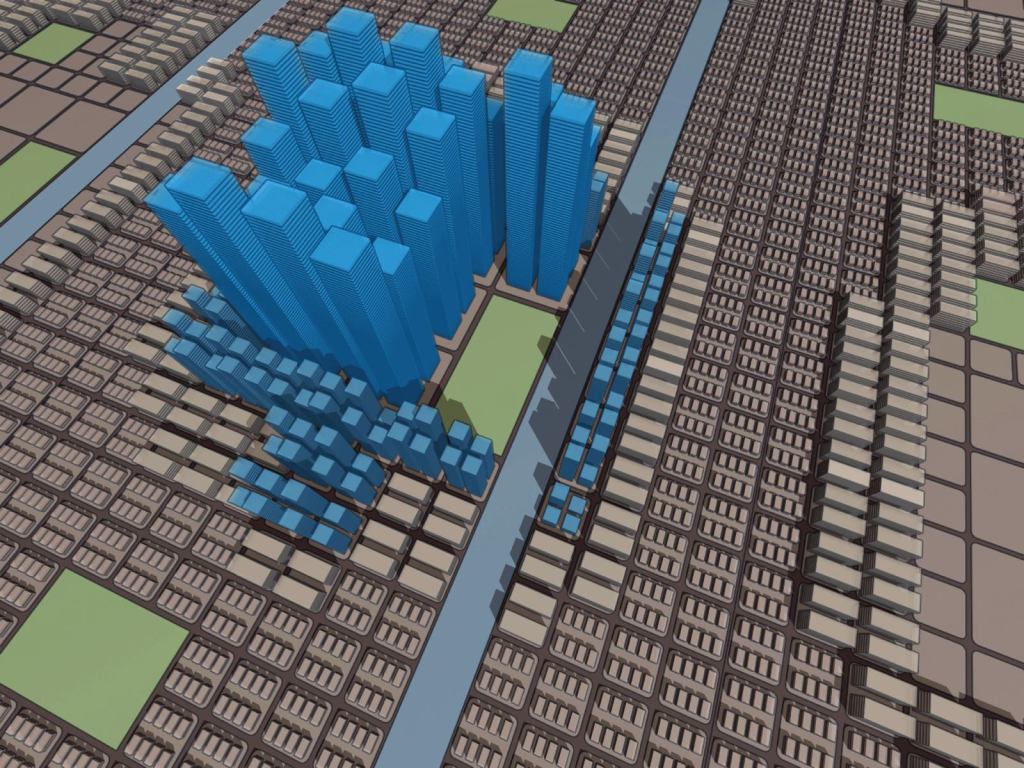
For instance, Home Properties uses what Smith calls a “very advanced Excel spreadsheet system” to project an anticipated sales price, what it will net in a deal, and what the internal rate of return will be. “We can play the ‘what if’ game very quickly and sell for different yields and so on and so forth,” he says of the software, which assisted the firm in closing on eight assets (valued at $338.9 million) in 2010.
Waterton, on the other hand, purchased a development system that helps it with budgeting, and that should allow them to do a rolling 18-month forecast. It can also operate with the history and rent trends in LRO. “We can import that into the year-one budget and apply growth rates that acquisitions, operations, and asset management agree to, and we can get our five-year underwriting done,” Stern explains. “It will give us the ability to do a five-year hold on a month-to-month basis as quickly as we’re doing a five-year analysis on an annual basis.”
Waterton’s program is still in development, however, and there are plenty of established technologies for acquisition modeling, such as ARGUS Valuation/DCF by Houston-based Argus Software and PropertyVMF by Santa Barbara, Calif.-based Yardi. For Yardi, the PropertyVMF program projects how acquisitions will perform on their own and how they’ll fit into a portfolio, taking into consideration factors such as whether a purchase may add too much exposure in a specific market or product type. “If I acquire this apartment complex and it needs 300 units rehabbed, which will cost me $3 million in the first year, how does this affect the entire cash flow?” asks Robert Teel, a vice president of Global Solutions at Yardi.
Ultimately, Teel says Yardi’s product doesn’t just help owners looking to make smart acquisition choices but can also be useful during the selling process—bringing the process full circle. It can forecast a potential sales price and exit timing. “It can help you decide which property to sell first,” he says. “You can use PortfolioVMF to look at the cash flows and the current value and what the IRR would be if I sold one property first and then another. You can use it to look at a buy, sell, and hold type of analysis.”